Letter त (ta) (Topic 1) in Module 5 – Hindi-Letters (BG)
त — Letter (ta)
- English sound anchor: table (softer dental t)
- Hindi words:
- तालाब ('taalab') — Pond / Lake
- तारा ('taara') — Star
- तीर ('teer') — Arrow
- तोता ('tota') — Parrot
- तरबूज ('tarbooj') — Watermelon
Half Letter त् (ta halant)
In Hindi, adding the virama (्) below त creates the half letter त् — it silences the inherent 'a' vowel and makes this consonant join the next one without a vowel between them. Ways to write the half letter: 1. Halant form: त् (the virama ् appears below the full letter)2. Conjunct form: When त् is followed by another consonant, the two letters merge visually into a conjunct (e.g. त्क = त्क). Some conjuncts develop unique shapes; these are learned as whole units. Example words using त्: - स्वतंत्र ('swatantra') — Independent / Free - सत्य ('satya') — Truth - त्वरा ('tvara') — Speed / Haste - कर्त्व्य ('kartavya') — Duty - उत्पाद ('utpaad') — Product / Output
How to Write त
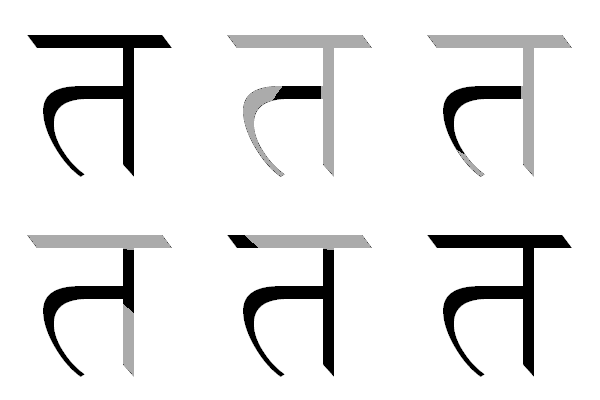
Watch the animated stroke order below. Each stroke is drawn in sequence — follow the arrows.
Stroke order animation via Wikimedia Commons, public domain.
Letter त (ta)
Recognize and pronounce the letter त (ta) with an English sound anchor and Hindi word examples.
त — Letter (ta)
- English sound anchor: table (softer dental t)
- Hindi words:
- तालाब ('taalab') — Pond / Lake
- तारा ('taara') — Star
- तीर ('teer') — Arrow
- तोता ('tota') — Parrot
- तरबूज ('tarbooj') — Watermelon
Half Letter त् (ta halant)
In Hindi, adding the virama (्) below त creates the half letter त् — it silences the inherent 'a' vowel and makes this consonant join the next one without a vowel between them. Ways to write the half letter: 1. Halant form: त् (the virama ् appears below the full letter)2. Conjunct form: When त् is followed by another consonant, the two letters merge visually into a conjunct (e.g. त्क = त्क). Some conjuncts develop unique shapes; these are learned as whole units. Example words using त्: - स्वतंत्र ('swatantra') — Independent / Free - सत्य ('satya') — Truth - त्वरा ('tvara') — Speed / Haste - कर्त्व्य ('kartavya') — Duty - उत्पाद ('utpaad') — Product / Output
How to Write त
Watch the animated stroke order below. Each stroke is drawn in sequence — follow the arrows.
Stroke order animation via Wikimedia Commons, public domain.